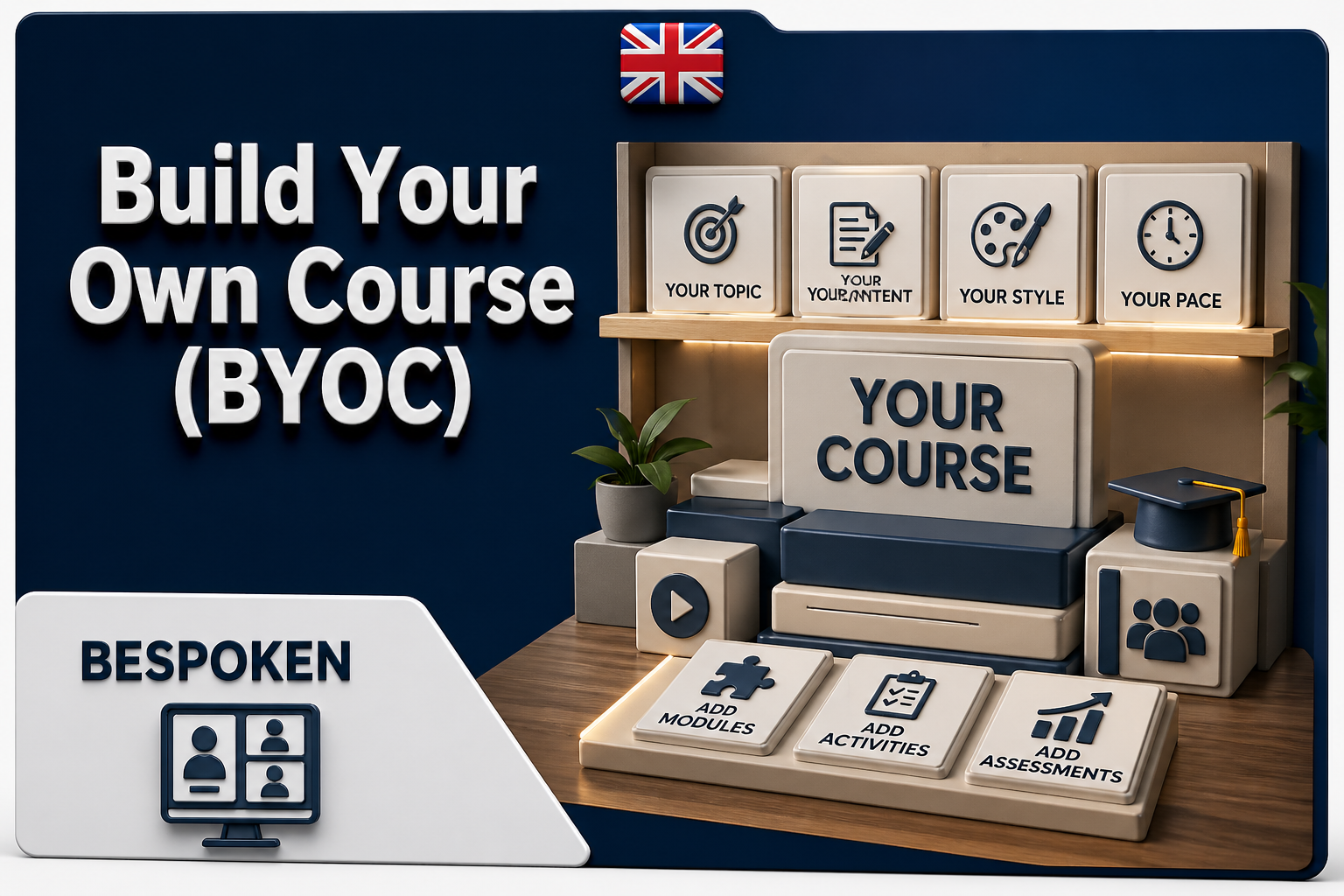
Build Your Own Course
Duration: 1 to 5 days
Delivery method: In person / online (Zoom or Teams) In-company training
Cost: Available upon application
Language: English
Course code: BYOC
Introduction
Every organization faces different threats, constraints, and regulators. We’ll take the elements you like from our AVSEC Resilience ® course—modules, scenarios, toolkits—and reshape them into a compliant, custom course that fits your risks, roles, and resources.
Scope & depth by role (supervisors, managers, C-Suite)
Delivery mode (classroom, e-learning, blended) and duration
Case studies, threat scenarios, and SOP alignment
Assessments (knowledge, practical, on-the-job) and QA artifacts
Frequently Asked Questions
It’s a guided process where we help you design a compliant, engaging aviation security (AVSEC) course tailored to your operation. We can build from scratch or adapt elements from our AVSEC Resilience course to your needs.
Security managers, trainers, and subject-matter experts at airports, airlines, ground handling agents, or regulated AVSEC training providers. If you need an initial, recurrent, or specialized AVSEC course, this is for you.
No but... We can provide modules, case studies, and scenarios from AVSEC Resilience database to save time and ensure high-quality content. Note: We cannot utilise training material that another provider has given you. Simply put, if you can't prove you are the source of the training material, we will not use it.
Absolutely. We integrate your operational procedures, local threats, and real-world examples so the course is relevant to your team.
We can design for classroom delivery, *e-learning, blended formats, or micro-learning modules. * subject to which platform you are using,
Depending on complexity, most bespoke courses take 2–6 weeks from scoping to pilot delivery.
Yes—logo, colour scheme, tone of voice, and document styles are all customizable.
Written tests, scenario-based questions, practical competency checklists, and on-the-job observation tools.
A complete, ready-to-deliver AVSEC course package: facilitator guides, learner materials, assessment tools, and audit-ready compliance documents.
Potential build your own course benefits, the why
- Content tailored to your unique risks, procedures, and staff roles
- Real-world scenarios drawn from your own operational environment
- Adapt proven modules for faster turnaround
- Reusable templates and materials save resources
- Classroom, e-learning, blended, or micro-learning formats
- Adjustable duration to fit operational schedules
- Incorporates your logo, tone of voice, and visual identity
- Designed with adult-learning principles for better engagement
- Knowledge tests, scenario-based exercises, and on-the-job evaluations
- Role-specific assessments for different staff levels
Alternatively, package one day course, into a week
Idea 1 (from the Build Awareness & Understanding Series)
- Sets the foundation: What is “security culture”? Why does it matter?
- Frames the rest of the day, so participants see how each piece fits into building a strong security culture.
Course page: Security Culture Building Blocks ↗️
- Once the big picture is clear, dive into practical methods to spread awareness.
- Helps participants connect culture → campaigns (how to make culture visible).
Course page: Creating Security Awareness Campaign ↗️
- Brings in a “critical thinking” element that applies broadly (phishing, disinformation, manipulation).
- Keeps energy high with interactive spotting exercises.
Course page: Identifying Fake News and Misinformation ↗️
- Ends on an empowering, action-oriented note.
- Gives leaders and practitioners practical strategies to sustain momentum.
Course page: Tools for Motivating Security Teams ↗️
- Foundation first (culture) → practical rollout (campaigns) → skills for individuals (misinformation spotting) → sustaining motivation (teams).
- Flows from strategic → tactical → individual skill → team empowerment.
- Keeps participants engaged with a mix of conceptual + hands-on topics.
A "Design Your Security Culture Roadmap" workshop (example) where participants:
- Break into small groups.
- Define a security culture goal for their organization (e.g., “reduce phishing clicks by 30%”).
- Design a mini awareness campaign (using what they learned).
- Add a misinformation spotting element (e.g., training game, fake news quiz).
- Plan one motivational tactic for their teams (rewards, recognition, gamification).
- Present back for group discussion.
Idea 2 (from the Enhancing Communication and Engagement Series)
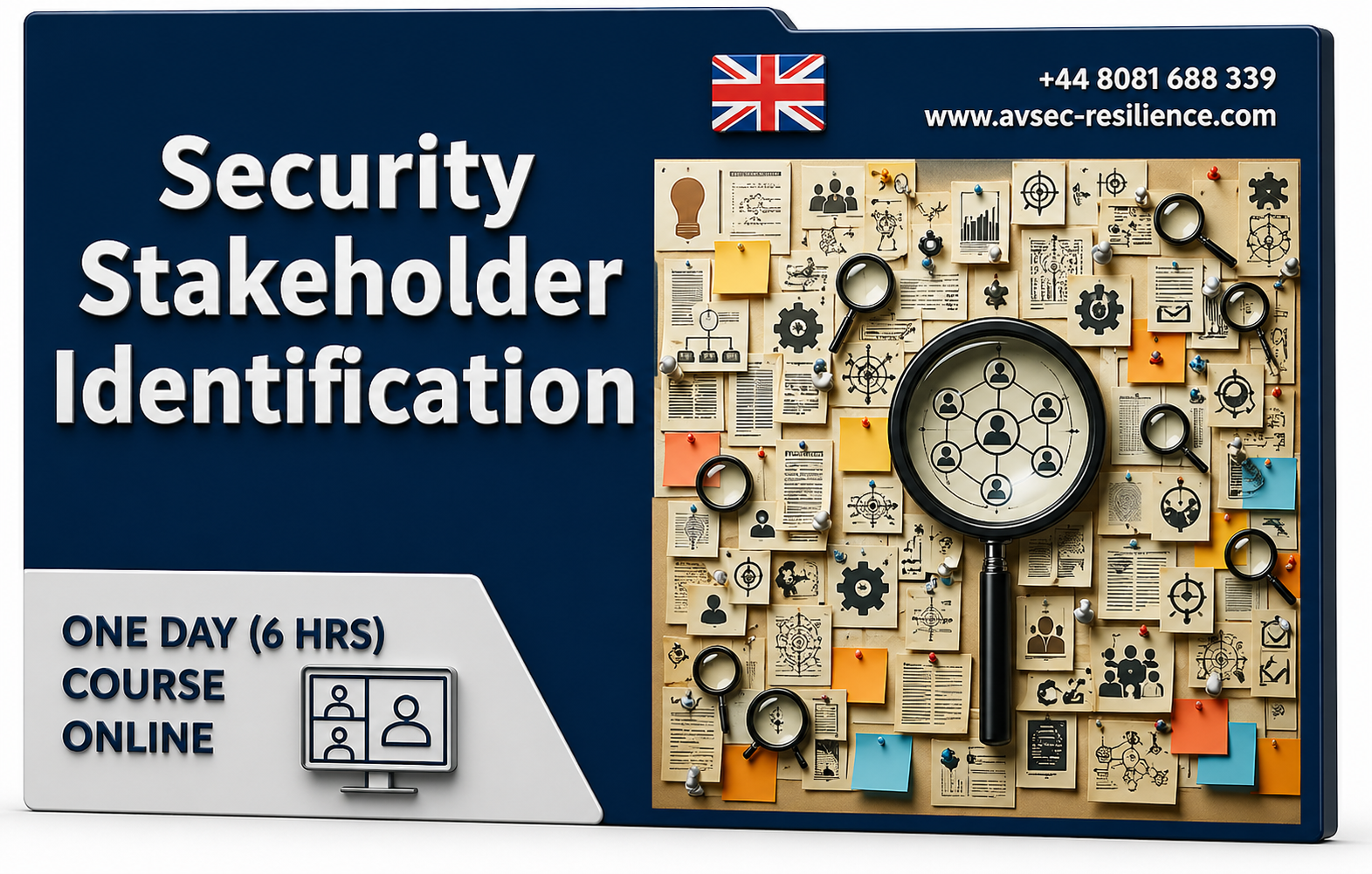
- Start with who matters: mapping out the ecosystem of stakeholders.
- Sets the stage for why feedback, registers, and customer service are needed.
Course page: Security Stakeholder Identification ↗️
- Once stakeholders are identified, show how to document and track them.
- Builds on session 1: turning abstract identification into a practical tool.
Course page: Introduction to Security Stakeholder Register ↗️
- Next, focus on two-way interaction: how to gather, process, and act on stakeholder input.
- Natural flow: now that we know stakeholders and how to track them, how do we listen to them?
Course page: Enhancing Feedback into Security ↗️
- End with a people-oriented, applied skillset: how to communicate with stakeholders as “customers.”
- Closing with this gives a service-mindset lens to all the previous material.
Course page: Customer Service for Security Practitioners ↗️
- Logical progression: Identify → Record → Listen → Serve.
- Moves from strategic mapping → operational tool → process improvement → soft skills & mindset.
- Keeps participants engaged by alternating between conceptual and practical.
A "Stakeholder Engagement Simulation" workshop, where participants:
- Identify key stakeholders for a hypothetical or real scenario (e.g., rolling out MFA, responding to an incident, compliance rollout).
- Build a mini stakeholder register (list + roles + communication needs).
- Design feedback channels (e.g., surveys, workshops, ticketing loops).
- Role-play a customer service scenario (practitioner explains security change to a difficult stakeholder).
- Group reflection: what worked, what didn’t, and how to apply back at work.
"The electric light did not come from the continues improvement of candles.” – Oren Harari.

Continue Looking: