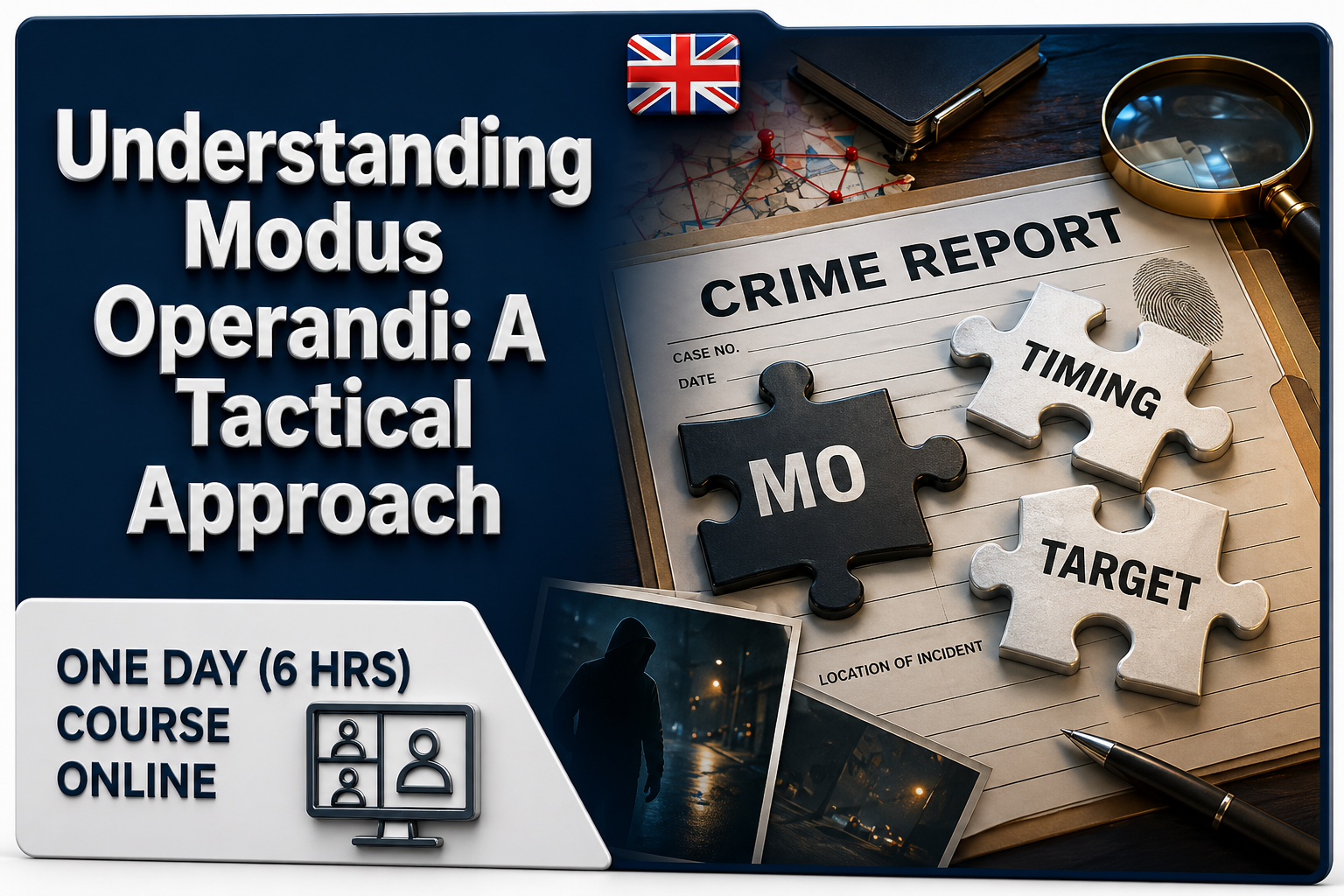
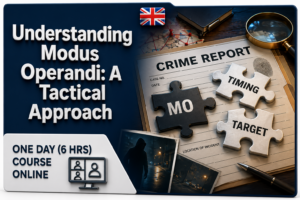
Understanding Modus Operandi
Duration: 1 day / 6 hours
Delivery method: Online (Zoom or Teams )/ inhouse company training
Target Audience: Ideal for security professionals, threat analysts, and investigators who need to understand behaviour and patterns.
Cost: Available upon application
Language: English
Course code: UMO-1
Introduction
Understanding modus operandi—the repeated patterns and tactics used by offenders—is crucial for modern security and investigative work. This practical 1-day course provides the tools to recognise behavioural patterns, link incidents, and strengthen your proactive threat response.
Whether you’re conducting investigations or leading frontline security, recognising MO helps stop threats before they escalate.
Course objectives: Learn to decode behavioural patterns
What you will learn
Participants will walk away with practical skills in:
- Defining and applying Modus Operandi (MO) in investigations
- Recognising patterns of repeat behaviour in fraud, theft, and insider threats
- Distinguishing between MO, intent, and signature
- Applying behavioural intelligence to security strategy
- Using MO profiles to strengthen inter-agency communication
Core modules in understanding Modus Operandi
Course topics Include:
- History and evolution of Modus Operandi in criminology
- Psychological drivers behind method selection
- Case-based MO pattern recognition
- Linking incidents through behavioural consistencies
- Tools for documenting and sharing MO insights
- Profiling repeat offenders using MO indicators
Why understanding Modus Operandi improves identification
Many security incidents stem from repeat behaviours. Learning to identify Modus Operandi allows you to:
- Prevent recurring threats through early detection
- Shorten investigation timelines
- Support evidence-based risk assessments
- Improve communication across agencies and departments
- Build detailed offender profiles and incident links
Potential course benefits, the why
Learn how identifying adversaries' methods helps anticipate and neutralize threats before they escalate.
Understand attacker behaviour to inform smarter business, risk, and policy decisions.
Shift from reactive to proactive security by understanding how and why threats emerge.
Focus your budget and efforts on countering the most relevant and likely threats.
Learn how to turn threat patterns and adversary tactics into business-relevant insights.
"Knowing how an adversary thinks is the first step to thinking ahead."
Continue Looking: