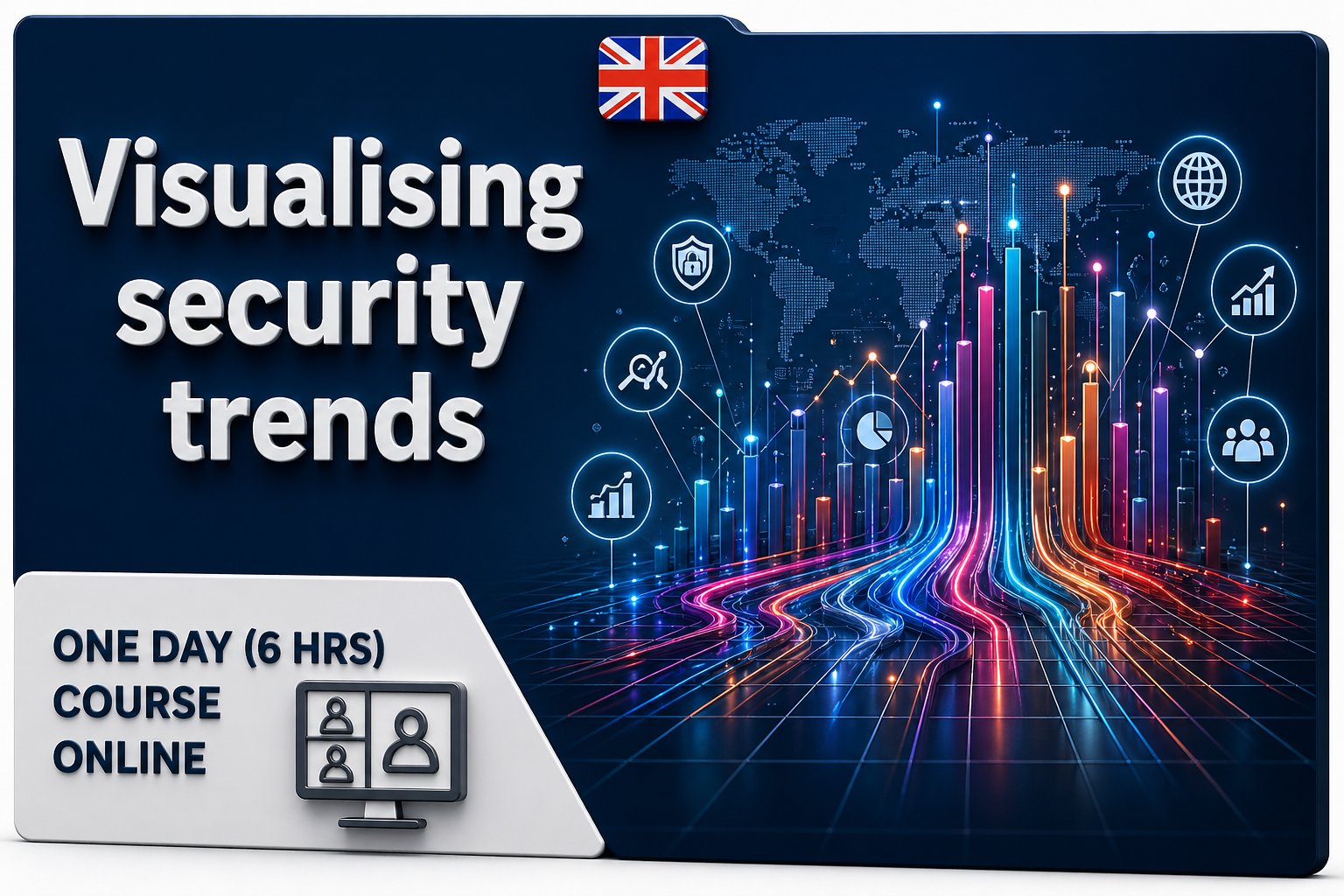
Professional course · VST-1 Transform security data into clear visual insight, actionable intelligence and stronger forward-looking decisions. Who should attend Course purpose In an increasingly data-driven security landscape, the ability to interpret, predict and communicate risk is critical to resilient decision-making. The course introduces the essential stages of Initial Data Analysis, Exploratory Data Analysis and Algorithmic Forecasting, helping participants move from raw information to strategic intelligence. Participants will learn to inspect data quality, identify patterns and anomalies, create compelling visual narratives and communicate forward-looking insights to diverse audiences. Course focus Operational outcomes More confident data-driven decision-making Improved detection of threats, patterns and anomalies Clearer communication of security insights Better use of modern visualisation tools More informed resource and policy decisions Stronger confidence in managing security risks IDA, EDA and forecasting Assess data quality, identify errors, handle missing records and validate the structure before analysis. Use visual and statistical techniques to uncover patterns, relationships, anomalies and behavioural trends. Use statistical modelling and machine learning concepts to consider what may happen next. Turn complex findings into a clear narrative that different audiences can understand and use. Connect evidence and visual insight with policy, resourcing and operational planning. Consider responsible use, context, limitations, privacy and the consequences of interpretation. Practical application The course introduces a range of visualisation types and helps participants select formats that make patterns, comparisons, relationships and change easier to see. Potential course benefits Use clearer visual evidence to support informed action, shared understanding and stronger security outcomes. Use clearer visual evidence to support informed action, shared understanding and stronger security outcomes. Use clearer visual evidence to support informed action, shared understanding and stronger security outcomes. Use clearer visual evidence to support informed action, shared understanding and stronger security outcomes. Use clearer visual evidence to support informed action, shared understanding and stronger security outcomes. Use clearer visual evidence to support informed action, shared understanding and stronger security outcomes. Delivery options Delivered online via Zoom or Microsoft Teams, or in-company for organisational teams. Course fee available upon application. A trend unseen is a lesson unlearned.Visualising Security Trends

For professionals turning complex security data into useful recommendations
Security practitioners
Security operations and intelligence teams
Policy, compliance and assurance professionals
Leaders communicating risk to stakeholders
From raw data to security insight
What participants will learn
Understand security trends and patterns
Apply the fundamentals of data visualisation
Prepare and analyse security data
Use appropriate tools and technologies
Communicate security insights to stakeholders
Explore predictive analysis and trend forecasting
What participants can take back to work
Three stages for turning data into insight
IDA: inspect before explore
EDA: explore the evidence
Algorithmic Forecasting
Visual storytelling
Security decision-making
Data ethics and security
Choose the visual that helps the audience understand
Why visualising security trends matters
Master data-driven decision-making
Improve threat detection and response
Communicate security insights clearly
Boost efficiency with modern tools
Empower decision-makers
Build confidence in managing security risks
Adapt the course to your organisation
Continue Looking: