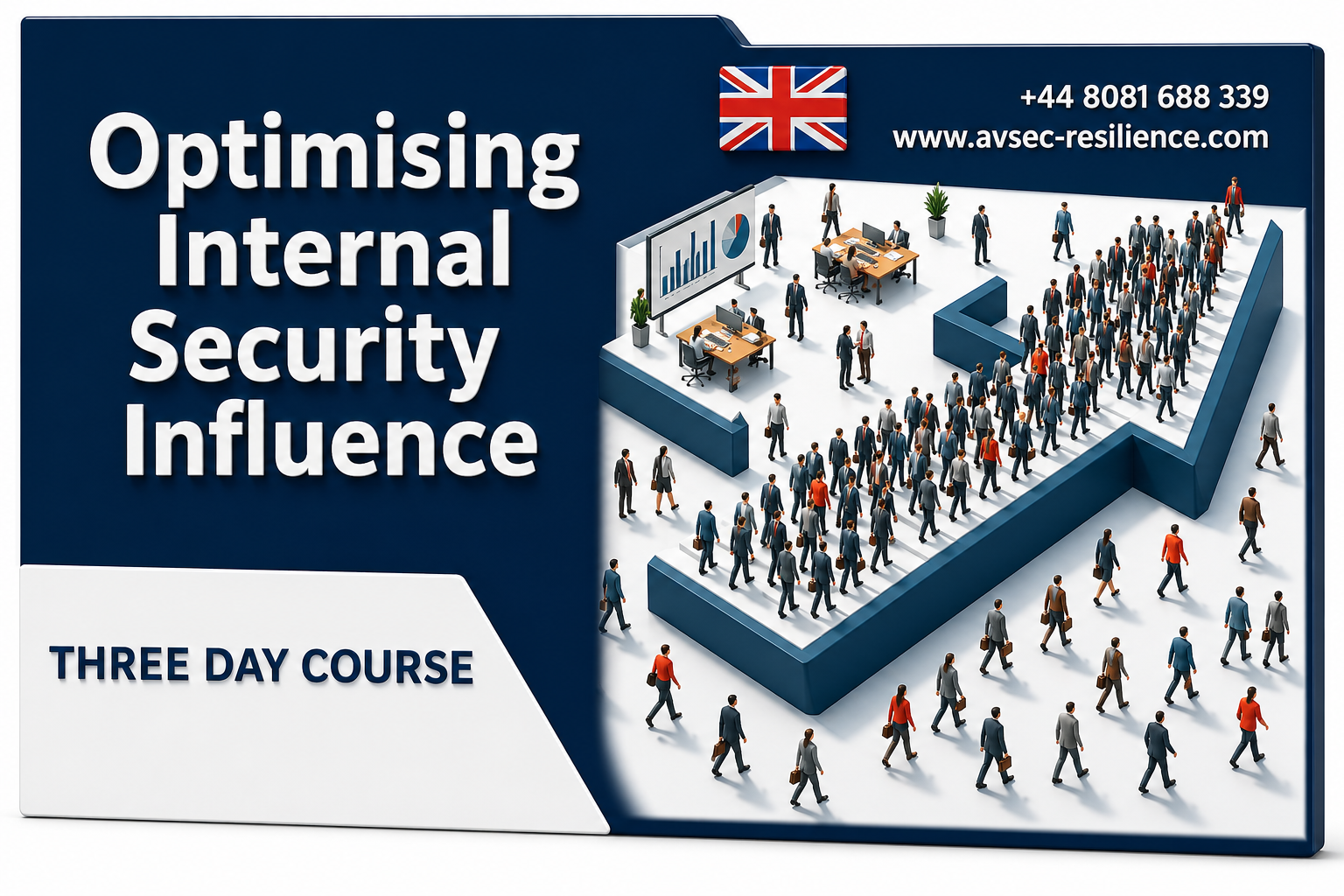
Professional course · OISI-3 Strengthen communication, internal branding and security culture so a small security function can create meaningful influence across a large organisation. Who should attend Course purpose Effective communication, strategic branding and a cohesive organisational culture are central to how security is understood and supported across a business. This intensive course gives security departments practical tools to elevate their internal communication, strengthen their identity and create a culture where security is understood as a shared responsibility. Participants explore how a small security function can influence a much larger workforce consistently through clear messages, visible leadership, useful engagement and purposeful collaboration. Course focus Operational outcomes A clearer internal security communication approach Stronger security department identity and visibility Practical methods for influencing larger workforces More connected security culture activity Better use of collaboration and diversity Greater organisational impact from security resources Influence in practice A 10–20-person security function is used as an example only, not as a universal staffing benchmark. A 20-person function represents 2% of the workforce. That is 50 workforce members per security professional. At 10 people, it is 1%, or 100 per professional. A 20-person function represents 0.5% of the workforce. That is 200 workforce members per security professional. At 10 people, it is 0.25%, or 400 per professional. The department creates influence through communication, trusted identity, repeatable engagement and shared security culture. Practical application The course connects the security department’s internal identity with the behaviours, relationships and communication routes that create influence across the organisation. Potential business benefits Position security as a catalyst for positive change, informed decisions and organisational resilience. Position security as a catalyst for positive change, informed decisions and organisational resilience. Position security as a catalyst for positive change, informed decisions and organisational resilience. Position security as a catalyst for positive change, informed decisions and organisational resilience. Position security as a catalyst for positive change, informed decisions and organisational resilience. Position security as a catalyst for positive change, informed decisions and organisational resilience. Delivery options Delivered as classroom or online instructor-led training. Classroom delivery can include one or two remote delegates, subject to agreed privacy, connectivity and participation arrangements. Classroom delivery can also use a client-approved translator for another language. Security influence is measured not by volume, but by resonance.Optimising Internal Security Influence

For security teams seeking greater internal influence
Security departments
Security managers and team leaders
Internal communications and culture leads
Training, quality and organisational development managers
Turn security presence into organisational influence
What participants will explore
Communication that travels across the business
Security department branding and identity
Culture as a shared security responsibility
Influencing a large workforce with a small team
Using diversity and collaboration for greater impact
Measuring resonance, engagement and output
What participants can take back to work
How can a 10–20-person security function influence a workforce of 1,000 or 4,000?
Illustrative range
20 people to 1,000
20 people to 4,000
The influence mechanism
Unify communication, branding and culture
Why internal security influence matters
Elevated communication across the business
A stronger security department brand
A more cohesive security culture
Greater impact and output
Better use of diversity and collaboration
Amplified organisational success
Adapt the course to your organisation

Continue Looking: