

Teams
Please join the Teams classroom 10 minutes early to check your audio and video.
Close email and other programs to ensure the best performance.
Keep your microphone muted when you are not speaking.
Maintain the same level of courtesy and professionalism expected in an in-person class or meeting.
Use tools such as chat, polls, reactions, and the “raise hand” feature to engage with the session.
Be prepared to be called on directly by the instructor, as you would in a traditional classroom setting.
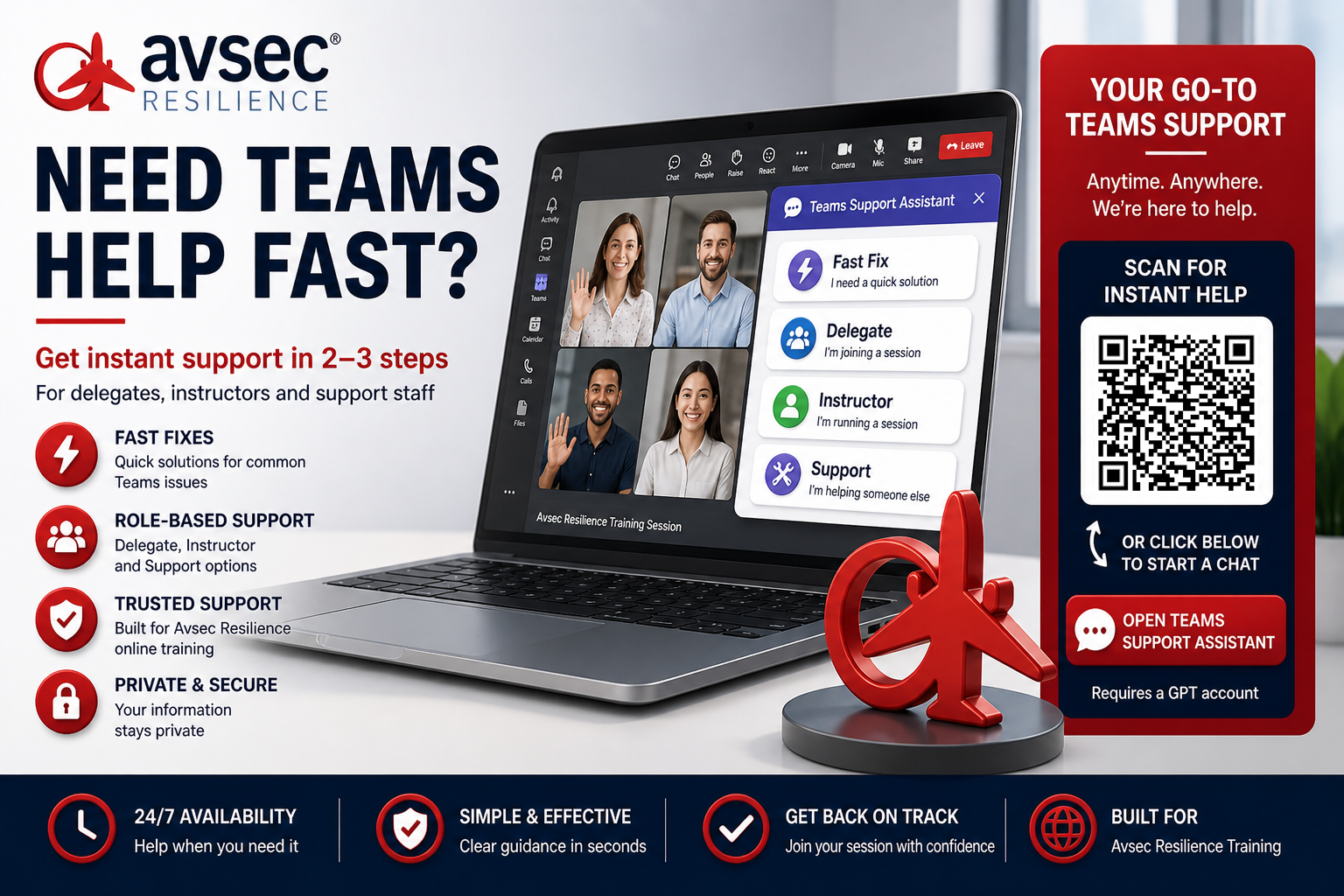
Our ChatGPT Teams Support Assistant helps you quickly fix common issues like audio, camera, or connection problems, so you can get into your session without delay.
Choose from:
• ⚡ Fast Fix (quick troubleshooting)
• 🎓 Delegate / Attendee support
• 🧑🏫 Instructor guidance
• 🛠 Support staff tools
Requires a ChatGPT account, free or paid
LIVE virtual classroom technical requirements & best practices
Our Teams-based virtual classrooms provide real-time, instructor-led learning where you can interact, ask questions, and collaborate with others. Each course is designed to keep you engaged and supported through:
Live interactive sessions that encourage active participation
Q&A opportunities with your instructor throughout the day
Independent study time for projects, reading, research, or videos
Pre-course materials (reading or assignments) for some courses
How to test audio and video in Teams
Test Your Audio
-
Open the Teams app.
-
Click on your profile picture (top right) → Settings → Devices.
-
Under Audio devices, pick your speaker and microphone.
-
Click Make a test call – speak into your mic and listen to the playback to confirm both mic and speaker work.
Test Your Video
-
Still in Settings → Devices, scroll to Camera.
-
Choose the correct camera from the dropdown.
-
You’ll see a preview window showing your video feed.
Handy Shortcuts During Class/Meetings
-
Mute/Unmute microphone:
-
Ctrl + Shift + M (Windows)
-
Command + Shift + M (Mac)
-
-
Start/Stop video:
-
Ctrl + Shift + O (Windows)
-
Command + Shift + O (Mac)
-
On the toolbar:
-
-
Click the small arrow (˅) next to the microphone icon to switch your mic or speakers.
-
Click the small arrow (˅) next to the camera icon to switch between cameras.
-
Hardware requirements
-
Minimum: 2 Mbps download / 1 Mbps upload
-
Recommended: Wired connection for best stability
-
Test your internet speed before class:
-
Click Go / Start
-
Confirm your speeds meet the minimum requirements
Required for full use of Teams tools (breakout rooms, screen sharing, whiteboards)
Tablets and smartphones are not recommended as a primary device
-
A headset with built-in microphone is recommended for clear audio
-
Avoid relying on built-in laptop microphones whenever possible
-
Strongly recommended for participation and interaction
-
Instructors may request cameras on during discussions or activities
-
Start/Stop video (toggle camera):
-
Ctrl + Shift + O (Windows)
-
Command + Shift + O (Mac)
-
Other related shortcuts that help with video meetings:
Blur or unblur background:
-
-
Ctrl + Shift + P (Windows)
-
Command + Shift + P (Mac)
-
-
Show/Hide meeting video gallery (switch focus):
-
Ctrl + Shift + W (Windows)
-
Command + Shift + W (Mac)
-
Helpful for viewing training materials while keeping Teams open
If you have two devices connected to Teams, only use one for audio (if you hear an echo, a second device maybe connected)
Software requirements
-
Download the Teams Desktop App:
https://www.microsoft.com/en/microsoft-teams/download-app ↗️ -
Keep Teams updated:
Updates are installed automatically, but you can also check manually:
Click your profile picture → Check for updates. -
Supported operating systems:
-
Windows
-
macOS
-
Linux (limited features compared to Windows/macOS)
-
-
Supported browsers (for joining via web):
-
Microsoft Edge (latest version)
-
Google Chrome (latest version)
-
Safari (on macOS, limited features)
-
Firefox (basic support, limited features)
-
-
PDF reader for course materials
-
Microsoft Office or Google Workspace for assignments/projects (as required)
Accessibility features in Teams
-
Policy Controls: Admins can enable captions, transcription, and interpreter support by default.
-
Allow IP Video: Ensures interpreters’ video can be displayed during meetings.
-
Organization-Wide Accessibility Settings: Admins can configure features globally for all users.
Additional information on accessibility is available, on the Avsec Resilience ® accessibility page
-
Live Captions & Subtitles: Automatic, real-time captions during meetings.
-
Transcription: Generates a written transcript during or after meetings.
-
CART Support: Allows integration with third-party captioners.
-
Sign Language Interpretation: Interpreters can be pinned or spotlighted for visibility.
-
Meeting Chat & Reactions: Provide alternative, nonverbal ways to communicate.
-
Screen Reader Compatibility: Works with Narrator, JAWS, NVDA, and VoiceOver.
-
High Contrast & Dark Mode: Improves readability for users with low vision or light sensitivity.
-
Immersive Reader: Reads text aloud, changes text spacing, highlights syllables—great for dyslexia.
-
Zoom & Magnifier Support: Works with OS-level magnification tools.
-
Adjustable Text Size: Chat and message text can be resized.
-
Immersive Reader: Simplifies layout and reads content aloud.
-
Focus Mode: Hides distractions, showing only shared content and the active speaker.
-
Clear Notifications: Users can customize alerts to reduce sensory overload.
-
Simple Interface Options: Minimize or collapse sections for easier navigation.
-
Full Keyboard Shortcut Support: Almost every action can be done via keyboard.
-
Voice Control Support: Works with Windows Speech Recognition, Cortana, and similar tools.
-
Accessible Navigation: Tab and arrow keys move between interface elements.
-
Pin/Spotlight Videos: Keep interpreters or key speakers visible at all times.
-
Raise Hand & Reactions: Quick nonverbal participation options.
-
Accessible File Sharing: Office apps include an Accessibility Checker for inclusive documents.
-
Custom Layouts: Change view (Gallery, Together, Focus) to suit user needs.
Teams translation options
During a meeting:
-
Click More (⋯) on the meeting toolbar.
-
Select Language and speech → Turn on live captions.
-
To choose a translation language:
-
Click More (⋯) again → Captions settings → Spoken language (choose the speaker’s language).
-
Then select Caption language (your preferred translation language).
-
💡 Captions appear at the bottom of the screen in your chosen language.
If your organization has a Microsoft Teams Premium license, you can get real-time translated captions in over 40 languages.
🧭 How to use (Teams Premium only)
-
Join a meeting.
-
Turn on Live captions (as above).
-
Click Settings (⚙️) next to captions.
-
Choose Subtitle language → [Your language]
(e.g., Spoken language: English → Subtitle language: Spanish).
📊 Available translations include:
English ↔ Spanish, French, German, Italian, Portuguese, Japanese, Chinese, Arabic, Hindi, etc.
You can instantly translate chat messages into your preferred language.
🔧 How to use
-
Hover over a message.
-
Click the More options (⋯) icon.
-
Choose Translate.
The message will appear in your Teams display language.
To revert it, click See original.
💡 You can set your display language in
Settings → General → Language and time → App language.
If transcription is turned on:
-
After the meeting, go to Meeting recap → Transcript tab.
-
Click Translate (available in Teams Premium) to view or download translated transcripts.
-
The speaker can communicate effectively in most routine and some non-routine situations.
-
Pronunciation, structure, vocabulary, and fluency are generally understandable even if not perfect.
-
Occasional errors occur, but meaning is rarely obscured.
-
The speaker can manage misunderstandings and repair communication when needed.
Reference: ICAO Doc 9835 (2nd edition) — Manual on the Implementation of ICAO Language Proficiency Requirements.
Equivalent levels:
-
CEFR: B1–B2
-
IELTS: 4.5–5.5
-
TOEFL iBT: 42–71
-
TOEIC: 550–780
Open Incognito / Private Browsing
You use Incognito / Private Browsing to keep a session from being saved on the device.
People commonly use it to:
Log into another account without signing out
Prevent history and form data from being stored
Test websites without cached data or cookies
Use shared/public computers more safely
Avoid sites affecting future recommendations
Note: It improves local privacy only — it does not hide you from websites, networks, or internet providers.
Below is a how to guide for each browser
1.Open Opera.
2.Click the O menu (top-left).
3.Select New Private Window.
- Shortcut:
- Windows/Linux → Ctrl + Shift + N
- Mac → ⌘ + Shift + N
1.Open Chrome.
2.Click the three dots (⋮) in the top-right corner.
3.Select New Incognito Window.
- Shortcut:
- Windows/Linux → Ctrl + Shift + N
- Mac → ⌘ + Shift + N
1.Open Edge.
2.Click the three dots (⋮) in the top-right corner.
3.Select New InPrivate window.
- Shortcut:
- Windows/Linux → Ctrl + Shift + N
- Mac → ⌘ + Shift + N
1.Open Firefox.
2.Click the three horizontal lines (☰) in the top-right corner.
3.Select New Private Window.
- Shortcut:
- Windows/Linux → Ctrl + Shift + P
- Mac → ⌘ + Shift + P
1.Open Brave.
2.Click the three lines or dots (≡ or ⋮) in the top-right corner.
3.Select New private window.
- Shortcut:
- Windows/Linux → Ctrl + Shift + N
- Mac → ⌘ + Shift + N
Note: Brave also offers Private Window with Tor for extra privacy
Mac:
1.Open Safari.
2.Click File in the menu bar.
3.Select New Private Window.
- Shortcut: ⌘ + Shift + N
iPhone/iPad:
1.Open Safari.
2.Tap the tabs button (two overlapping squares).
3.Tap [X] Tabs or Start Page at the bottom.
4.Select Private → then tap + to open a private tab.
Environment recommendations
-
Quiet, well-lit space with minimal distractions
-
Reliable power source (avoid battery-only)
-
Notify others in your workplace/ household of your class times
-
Take breaks away from your screen during scheduled pauses
Learning experience expectations
Expect frequent interaction (polls, chat, breakout groups). You may be asked to contribute every 3–5 minutes.
Small group discussions and activities are part of the course.
Follow the same respect and participation norms as in-person training.
Classes are designed in shorter, focused segments with regular breaks.
Some sessions include follow-up work, reflection tasks, or group projects. (Dependent on client requirements)
A facilitator or co-host may be available to help with technical or chat management.
Frequently asked Questions (FaQ) – Using Teams for online training
You can join through the Teams desktop app, mobile app, or a web browser. The desktop app is recommended for the best experience. Download here:
Microsoft Teams Download ↗️
-
Click the meeting link sent by your trainer.
-
The pre-join screen will open where you can choose audio/video settings.
-
Select your devices, then click Join Now.
-
On the pre-join screen, click the Device settings (gear icon).
-
Check that your speaker, microphone, and camera are working.
-
Inside a meeting, click the small arrow (˅) next to the mic or camera icons to switch devices.
-
Make sure the correct audio device is selected in Device settings.
-
Check your computer’s system volume.
-
Leave the meeting and rejoin if the problem continues.
-
Mute/Unmute mic: Ctrl + Shift + M (Windows) / Command + Shift + M (Mac)
-
Start/Stop camera: Ctrl + Shift + O (Windows) / Command + Shift + O (Mac)
-
Raise/Lower hand: Ctrl + Shift + K (Windows) / Option + Y (Mac)
-
Open chat: Ctrl + Shift + C (Windows) / Command + Shift + C (Mac)
Yes. Install the Microsoft Teams app from the App Store (iOS) or Google Play (Android).
No. You can join as a guest using the meeting link provided. If your organization gave you a Teams account, sign in for full features.
-
Microsoft Edge (latest version)
-
Google Chrome (latest version)
-
Safari (Mac, limited features)
-
Firefox (basic support)
-
In the meeting, click the Share content button (upward arrow).
-
Choose your entire screen, a specific window, or a PowerPoint file.
Teams updates automatically. You can also click your profile picture → Check for updates.
Troubleshooting
-
Check that your camera isn’t being used by another application.
-
Select the correct camera under Teams Video Settings.
-
Restart Teams or update to the latest version.
Microsoft Teams mirrors your camera preview, so anything in your background—like logos or text—may appear flipped to you.
Is my logo actually backwards for other people?
Usually, no.
Other participants typically see your video the correct way around, even though it looks reversed on your screen.
Why does Teams mirror my video?
Teams mirrors your preview to make it feel more natural—like looking in a mirror—so your movements align intuitively.
When will my logo appear backwards to everyone?
This can happen if:
- Your background image was already flipped before uploading
- You’re using third-party camera or virtual camera software
- You’re streaming through tools like OBS Studio that may mirror output
-
Use headphones to reduce background noise and echo.
-
Make sure only one device in the room is connected to audio.
-
Test your microphone and speakers from the Teams toolbar.
-
Move closer to your Wi-Fi router or use a wired connection.
-
Close other applications using the internet (e.g., streaming or downloads).
-
Turn off your camera if your connection is unstable.
-
Make sure the host has enabled participant screen sharing.
-
Select the correct screen or window when prompted.
-
Double-check the meeting link or Meeting ID and password.
-
Ensure you have installed the Teams app (desktop or mobile).
-
Restart your device and try again.
-
Check your internet connection – Make sure you’re online and your connection is stable.
-
Update the Teams app – Outdated versions may block access; download the latest update from Teams website or app store.
-
Firewall or VPN issues – If you’re on a work or school network, a firewall or VPN might block Teams . Try disconnecting from the VPN or switching to a personal network.
-
Browser issues (if joining without the app) – Clear your browser cache, or try a different browser such as Chrome or Edge.
-
Wrong time zone – Double-check the session start time in your local time zone https://www.worldtimebuddy.com/ ↗️
-
Capacity reached – If the session has a participant limit, you may see an error message when the class is full. In that case, contact support.
Quick internet tips
Shut down YouTube, Netflix, cloud backups (Google Drive, OneDrive, Dropbox), or downloads running in the background.
Ask family/housemates to pause streaming, gaming, or large downloads during your call.
-
If you’re on Wi-Fi → move closer to the router.
-
If possible → plug in an Ethernet cable for instant stability.
-
On mobile → switch to 4G/5G data if your Wi-Fi is weak.
-
urn video off if the call starts lagging.
-
Use “Turn off HD” in Teams video settings.
-
Stop virtual backgrounds, which need more processing + data
Quick Wi-Fi fixes
Even a few meters can reduce lag. Walls, doors, and floors weaken the signal.
If your router has both 2.4 GHz and 5 GHz networks:
-
Use 5 GHz if you’re close → faster and less crowded.
-
Use 2.4 GHz if farther away → stronger range.
-
Move away from microwaves, cordless phones, or Bluetooth speakers.
-
Turn off Wi-Fi on other unused devices (old tablets, spare phones).
-
Higher is better → raise your laptop/phone or router off the floor.
-
Open the door if you’re in a closed room.
Disable HD video and virtual backgrounds → lowers Wi-Fi load.
Background and renaming
Before joining a meeting
-
When you’re on the pre-join screen (where you check your mic and camera):
-
Turn your camera on.
-
Click the Background filters or Background effects icon (it looks like a person with sparkles 🌟).
-
-
You’ll see these options:
-
Blur – softly blurs everything behind you.
-
Add new – upload your own image (e.g., office, beach, etc.).
-
Preset backgrounds – choose from Microsoft’s default options.
-
-
Select your desired effect → click Join now.
-
Move your mouse → click the More (⋯) button in the meeting toolbar.
-
Select Effects and avatars → Backgrounds.
-
Choose one of:
-
Blur
-
A preset background
-
Or click Add new to upload your own image.
-
-
Click Apply.
🧠 Tip: You can also use Avatars (cartoon-style you) under “Effects and Avatars” if your organization enables it.
Before joining a meeting:
-
On the pre-join screen, tap Background effects (small person-with-sparkles icon at the top of your video preview).
-
Choose:
-
Blur
-
A preset background
-
Or Add new to upload a custom one (if supported).
-
-
Tap Done → then Join now.
During a meeting:
-
Tap your screen → tap More (⋯).
-
Choose Background effects.
-
Pick Blur or another background → Apply.
Note: Background effects require iOS 14+ and a fairly recent iPhone or iPad model.
Before joining:
-
On the preview screen before joining, tap Background effects.
-
Choose Blur or a background image.
-
Tap Done → Join now.
During a meeting:
-
Tap More (⋯) → Background effects.
-
Pick your background → Apply.
Note: Works best on newer Android devices with strong camera processing.
💻 On Desktop (Windows or Mac)
-
Open your picture on your computer:
-
In Windows Photos → click the rotate icon (↻) twice to turn 180°.
-
In Mac Preview → click Tools → Rotate Left twice.
-
-
Save the rotated version.
-
Go to Teams → click your profile picture (top right) → Manage account → Edit (pencil icon) on your photo.
-
Upload the rotated image.
📱 On Mobile (Android / iPhone)
-
Open the picture in your Photos or Gallery app.
-
Tap Edit → Rotate, and turn it 180° (two 90° rotations).
-
Save the photo.
-
In the Teams app, tap your profile icon → Edit image → Upload photo, and choose the rotated version.
Before or outside a meeting:
-
Open the Microsoft Teams app and sign in.
-
Click your profile picture or initials (top-right corner).
-
Choose Edit profile.
-
Click the pencil ✏️ icon next to your name.
-
Enter your new display name → click Save.
⚠️ If your Teams account is part of a work or school organization (Microsoft 365), your IT admin may restrict name changes. You’ll have to ask your admin or update it in your Microsoft 365 profile via https://myaccount.microsoft.com. ↗️
Please note:
During a meeting:
Teams does not allow renaming yourself during a meeting if you’re signed in with a work/school account.
However:
-
If you join as a guest, you can type any name you want before joining on the “Enter your name” screen.
Before a meeting:
-
Open the Teams app → tap your profile picture (top-left).
-
Tap Edit profile.
-
Tap the pencil icon next to your name.
-
Enter your new name → tap Save.
If your account is managed by an organization, this option might be greyed out.
-
Open the Teams app → tap your profile picture (top-left).
-
Tap Edit profile.
-
Tap the pencil icon beside your name.
-
Edit your name → tap Save.
Same restriction: some organizational accounts can only be renamed by the admin.
Is Microsoft Teams connected to the correct LinkedIn account
- Open Microsoft Teams
- Click your profile picture (top right)
- Go to Settings
- Select Apps / Connected Apps
- Look for LinkedIn integration status
- Log into your LinkedIn account
- Go to Settings & Privacy
- Navigate to Data Privacy / Permitted Services
- Confirm Microsoft or Teams is listed
- Ensure it’s the correct LinkedIn profile
- In Teams, remove LinkedIn from connected apps
- In LinkedIn, revoke Microsoft access (if needed)
- This clears any incorrect connection
- Reconnect LinkedIn through Teams
- Log in carefully when prompted
- Use incognito/private browser to avoid auto-login issues
- Select the correct LinkedIn account
- Browser auto-login selects wrong LinkedIn account
- Cached sessions causing connection errors
- Multiple LinkedIn accounts in use
🖱️ Mouse pointer size guide
- Makes the cursor easier to see during screen sharing
- Helps accessibility for users with visual strain
- Improves audience visibility in presentations
-
- Click Start Menu
- Open Settings
- Select Accessibility
- Click Mouse pointer and touch
- Use the Size slider to make the pointer larger
🔄 Reset to default
- Move the Size slider back to the smallest setting
🎤 Trainer tip
Say: “If your audience can’t see your cursor clearly, increase it before presenting.”
.
-
🔍 Increase pointer size
- Click the Apple menu ()
- Open System Settings
- Go to Accessibility
- Select Display
- Adjust the Cursor size slider
🔄 Reset to default
- Move the slider back to the smallest position
⚡ Bonus feature
- Shake your mouse quickly to temporarily enlarge the cursor
🔍 Increase pointer size
- Open Settings
- Go to Accessibility
- Turn on Large mouse cursor
- Adjust the size slider
🔄 Reset to default
- Turn off Large mouse cursor or reduce the size slider
🔍 Increase pointer size
- Open Settings
- Go to Accessibility
- Find Cursor Size
- Select a larger option
🔄 Reset to default
- Choose the default or smallest size
Before starting your session:
- Increase pointer size slightly (not too large)
- Move cursor slowly when presenting
- Avoid rapid movements (hard for viewers to follow)
Taking a great Teams course picture
✅ Sit facing a window for natural light (avoid having a window behind you).
✅ If indoors, place a soft light (lamp or ring light) slightly above eye level in front of you.
❌ Avoid harsh overhead lights (they cause shadows).
✅ Position your camera at eye level (stack books or use a stand if needed).
✅ Frame yourself from the chest up (“head-and-shoulders” view).
✅ Keep a little space above your head (not cut off).
✅ Wear solid colours (avoid stripes or tiny patterns, which cause distortion).
✅ Choose colours that contrast your background (so you don’t blend in).
✅ Keep it professional but comfortable — like a virtual classroom outfit.
✅ Sit upright with relaxed shoulders.
✅ Smile naturally (warm, approachable look).
✅ Look into the camera lens, not the screen — it feels like eye contact.
Tips for Teams course pictures
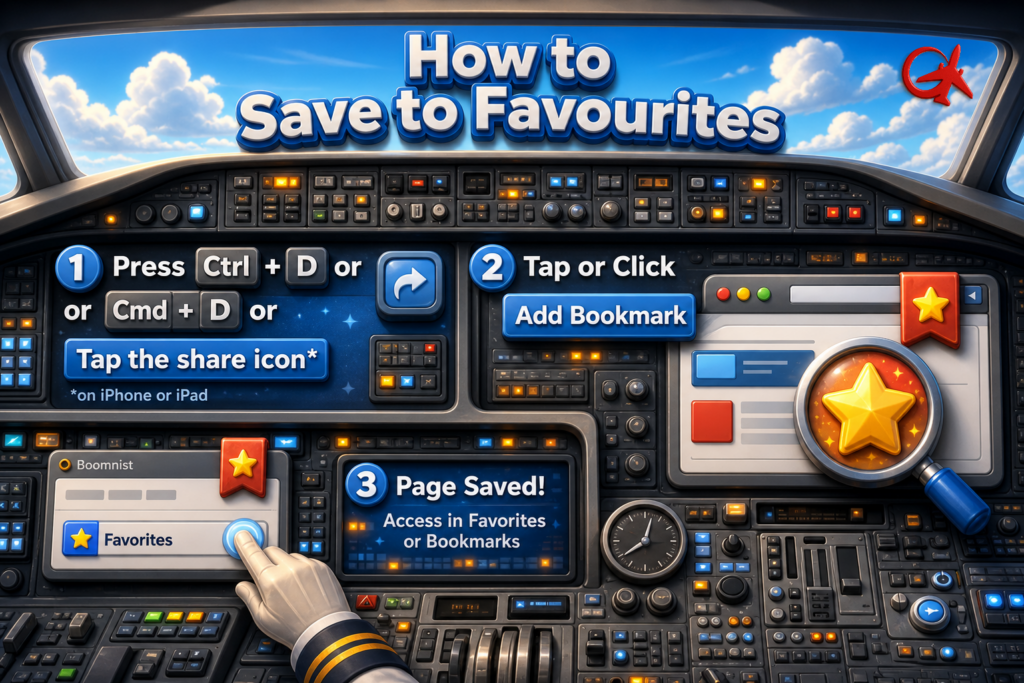
Save this page to favorites/ or bookmark
Works the same in Chrome, Edge, Firefox, Brave, Opera
✅ Save to Favourites
-
Open the website
-
Click the ⭐ star icon in the address bar
(top right of the browser) -
Choose a folder (optional)
-
Click Done / Save
⌨️ Keyboard shortcut
Ctrl + D
📂 View Favourites
-
Click ⭐ or three dots (⋯) → Bookmarks / Favourites
Works in Chrome, Safari, Edge, Firefox
✅ Save to Favorites
-
Open the website
-
Click the ⭐ in the address bar
OR menu bar → Bookmarks → Add Bookmark -
Choose location → Add
⌨️ Shortcut
Command (⌘) + D
📂 View Favourites
-
Click Sidebar icon or Bookmarks menu
Works in Safari, Chrome, Edge, Firefox
✅ Save to Favourites
-
Open the webpage
-
Tap the Share icon (⬆️ square) or three dots
-
Tap ⭐ Add Bookmark or Add to Favourites
-
Tap Save
📂 View Favourites
-
Open a new tab → tap Bookmarks / Favourites
Works in Chrome, Samsung Internet, Edge, Firefox
✅ Save to Favourites
-
Open the website
-
Tap three dots (⋮)
-
Tap ⭐ Bookmark
-
Edit name/folder → Save
📂 View Favourites
-
Three dots (⋮) → Bookmarks / Favourites
Backup & support
-
If you lose internet connection: re-join using the same Teams link.
-
If technical issues persist, contact Avsec Resilience Point of Contact (POC) or IT support (details in your pre-course email).
-
Sessions may be recorded (course-dependent) — check with your instructor.
Clear Cookies
You clear cookies to fix problems, protect privacy, and reset how websites interact with you.
Common reasons to clear cookies:
🔐 Protect privacy – removes stored logins and tracking data
⚙️ Fix website issues – solves problems like pages not loading, errors, or broken logins
🔄 Reset websites – clears saved preferences and sessions
👥 Sign out of accounts – especially useful on shared devices
🛒 Remove outdated data – fixes issues with carts, forms, or personalization
In short: clearing cookies removes stored site data so websites start fresh.
Below is a how to guide for each browser

On desktop:
- Click the three dots ⋮ → Settings → Privacy and security → Site settings.
- Select View permissions and data stored across sites (or search for the site in the top-right).
- Find the website → Click the trash bin icon 🗑️ or Clear displayed data.
- Click ⋯ → Settings → Cookies and site permissions → Manage and delete cookies and site data.
- Click See all cookies and site data.
- Search for the site → click the arrow ▸, then trash bin 🗑️.
- Open Settings → Privacy & Security.
- Under Cookies and Site Data, click Manage Data….
- Type the site name in the search bar.
- Select it → Remove Selected → Save Changes.
On Mac:
- Go to Safari → Settings → Privacy → Manage Website Data…
- Search for the website.
- Select it → Remove.
On iPhone/iPad:
- Go to Settings → Safari → Advanced → Website Data.
- Search for the website.
- Swipe left on it → Delete.
Continue browsing courses